This module has been prepared to support engagement with the materials from the Future of AAC Research Summit.
It will undergo Beta-Testing with students at 5 colleges and universities in Fall 2026.
“Meaningful participation” is a key goal of all AAC interventions.
In this module you will read three papers, and watch one video. All are authored or co-authored by people who use AAC. All were first presented at the Future of AAC Research Summit, held in May 2024.
For each of the 3 papers ( and the video), you will be asked to provide a short response to this question: What was the most important message you took away from the reading? After you submit your response, you will be able to see selected response from other module participants.
There is also an Engagement Activity at the end of this module in which you will have an opportunity to ask a question to one of the authors of these 4 papers/videos. Answers from the authors to selected questions will also be available to you in this module.
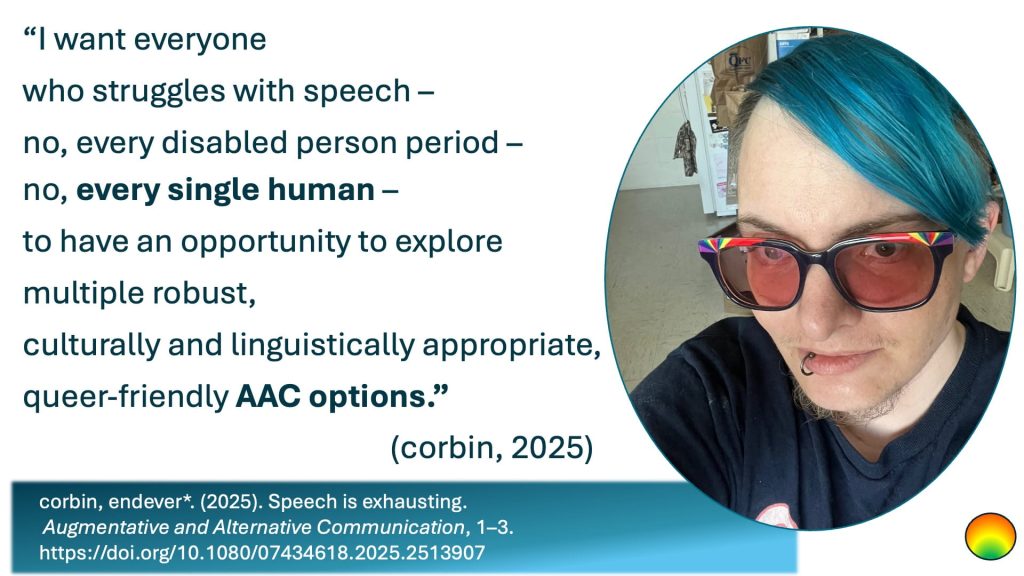
In this paper, endever* corbin focuses on their “meaningful participation in society as a semispeaking AAC user, the importance of self-determination and interdependence, and the critical role of participatory research. “
As endever* explains, “When I have access to multiple means of communication – not just speech but also high-tech AAC, low-tech backups, and American Sign Language (ASL), I am far more able to join in on conversations I choose. A social environment that respects my need to regularly switch modalities supports my ability to show up and participate authentically.”
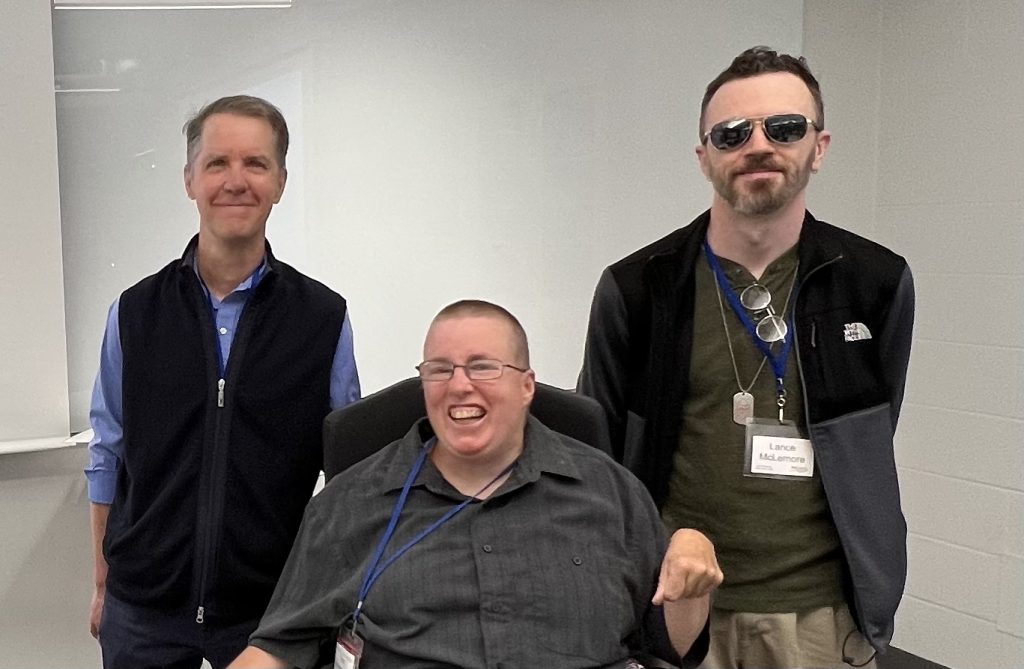
In this paper, Dr. David McNaughton, Dr. Tracy Rackensperger, and Lance McLemore address two major questions:
1. How can we better support adults with developmental disabilities who use AAC in fully participating in key areas of adult life?
2. How can future research and technology be shaped by the voices and priorities of AAC users themselves?
Godfrey Nazareth is a Pennsylvania-based entrepreneur, biomedical engineer, research scientist, keynote speaker, and full-time user of augmentative and alternative communication (AAC) tools and supports. He has been battling motor neuron disease (ALS) since 2004, and he has designed and built a variety of custom assistive devices to help him communicate, function, operate, and interact as efficiently as possible.
In this paper, Godfrey describes how “through innovation and resilience, I have discovered infinite possibilities and I continue to use AAC to work miracles in my own life.”

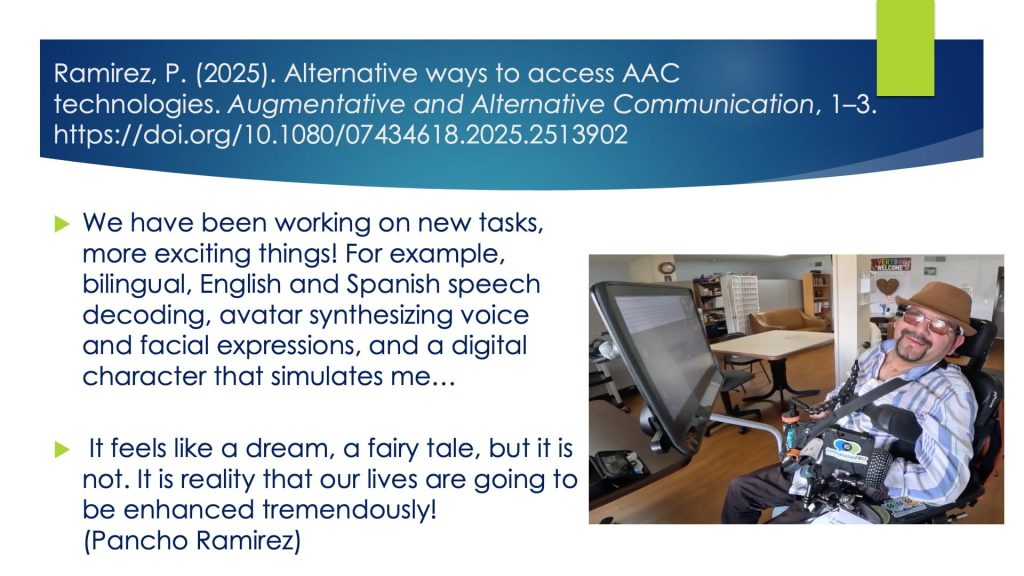
More than 21 years ago, Pancho Ramirez had a car accident that led to a brain stem stroke, leaving him paralyzed and unable to speak. Since that time, he has found many strategies to communicate with his family, and he participated in a clinical trial at the University of California, San Francisco to investigate brain computer interface to support communication.
In this paper ( also available as a video presentation), Pancho describes the impact of AAC on his life and his hopes for future AAC development.