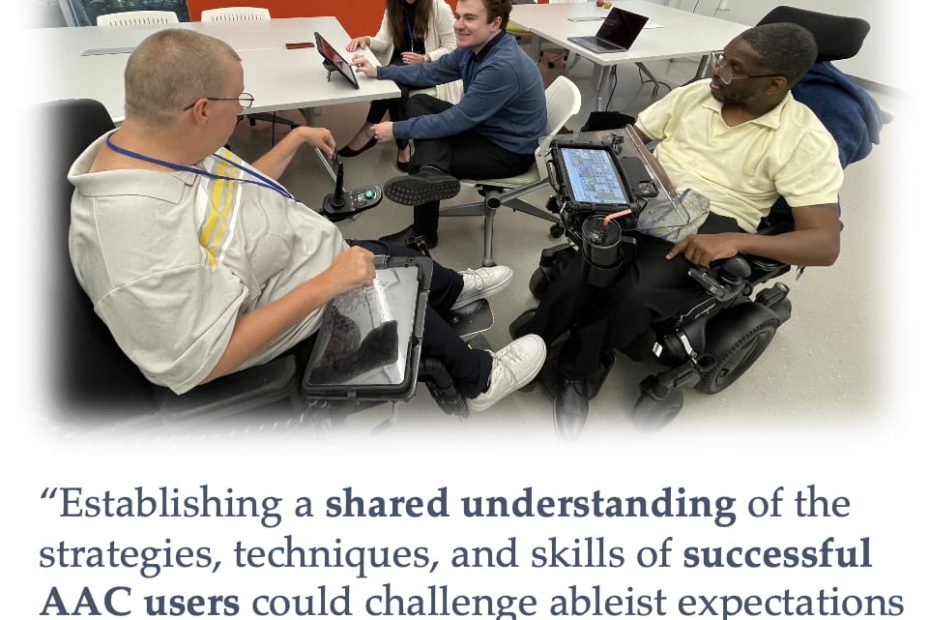
Ableism (Wong, 2025)
“Nonspeaking people belong in public, holding court in conversations, doing our thing, our access needs respected, and being our full selves unapologetically”
(Wong, 2025, p.203)
“Nonspeaking people belong in public, holding court in conversations, doing our thing, our access needs respected, and being our full selves unapologetically”
(Wong, 2025, p.203)
Webcasts by AAC users, AAC researchers, and Advocates are available
Twenty-one papers from the Future of AAC Research Summit are now freely available as a special issue in the AAC journal.
Grant Blasko Grant Blasko is a young adult nonspeaking autistic student and part of the Summit’s Organizing Committee. He is a University of Washington DO-IT Scholar, an active member of TASH’s National Communication Access Workgroup,… Systemic social isolation of AAC users (Blasko, 2024)
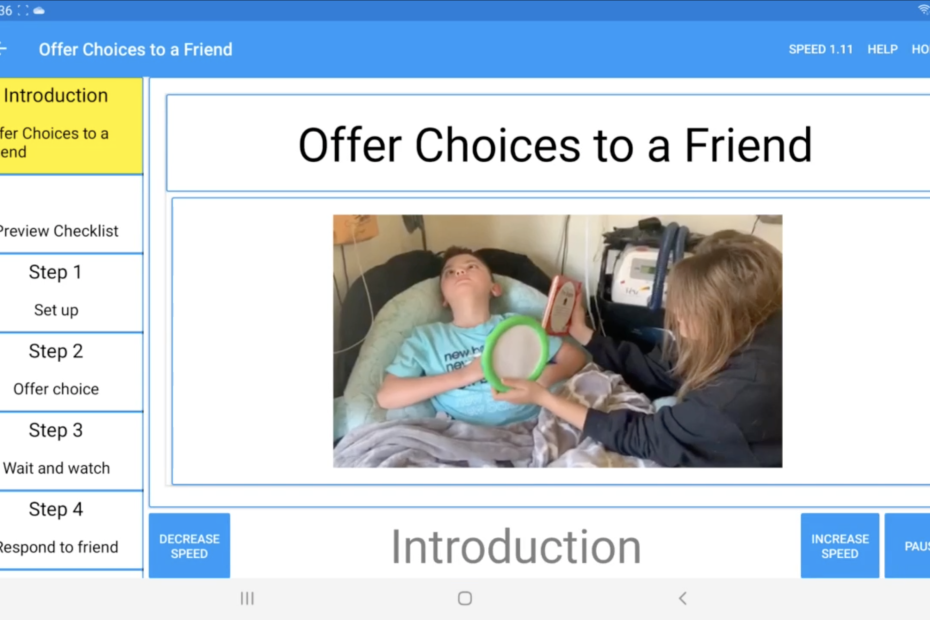
This library contains an example training videos created in the INSTRUCT app. Click on any of the links below to view a related training.
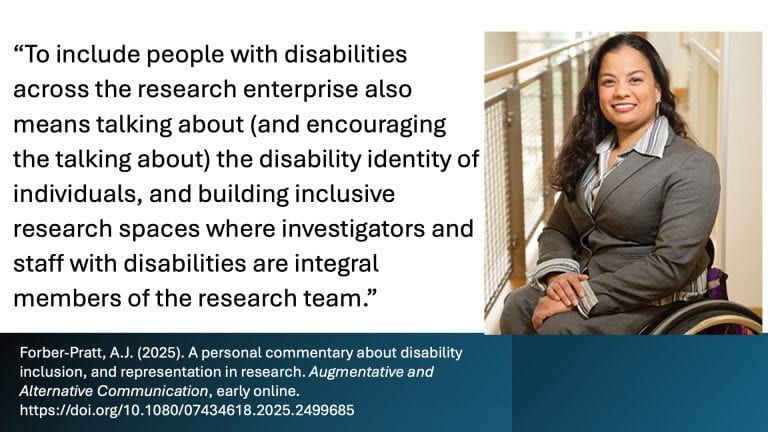
Anjali Forber-Pratt Anjali J. Forber-Pratt, Ph.D. is a disability activist, former faculty member, 2-time Paralympic medalist and the Director of Research at the American Association on Health & Disability. Dr. Forber-Pratt was formerly the… Disability representation and inclusivity in research (Forber-Pratt, 2024)
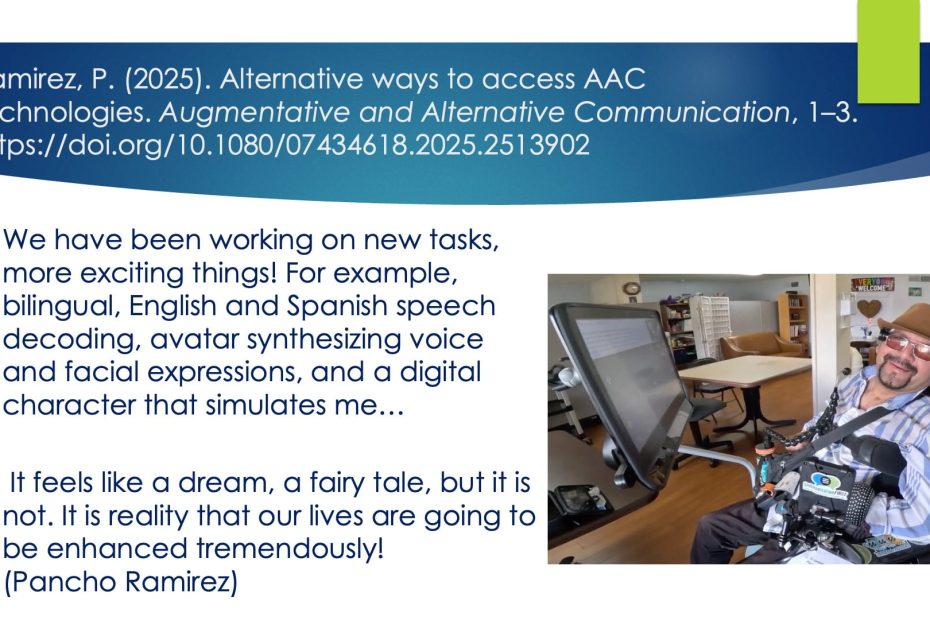
Pancho Ramirez Pancho Ramirez is the current Vice Chair of CommunicationFIRST’s Board of Directors. As a Mexican immigrant farmworker, he acquired his speech disability in 2003 at age 20 from a brain stem stroke after… “Alternative” ways to access AAC technologies (Ramirez, 2024)
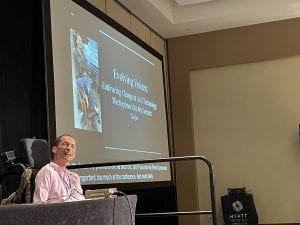
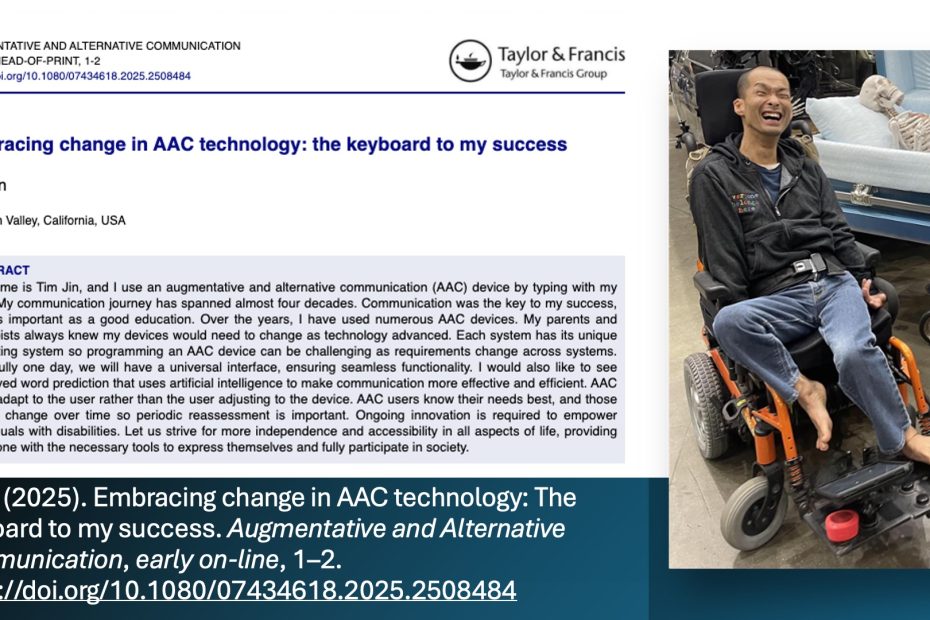
Tim Jin Tim Jin is a Communication Expert and Advocate who serves on several boards, government taskforces. and committees, and routinely speaks professionally at conferences and training seminars about his passion to expand communication access… Evolving voices: Embracing change in AAC technology, the keyboard to my success (Jin, 2024)
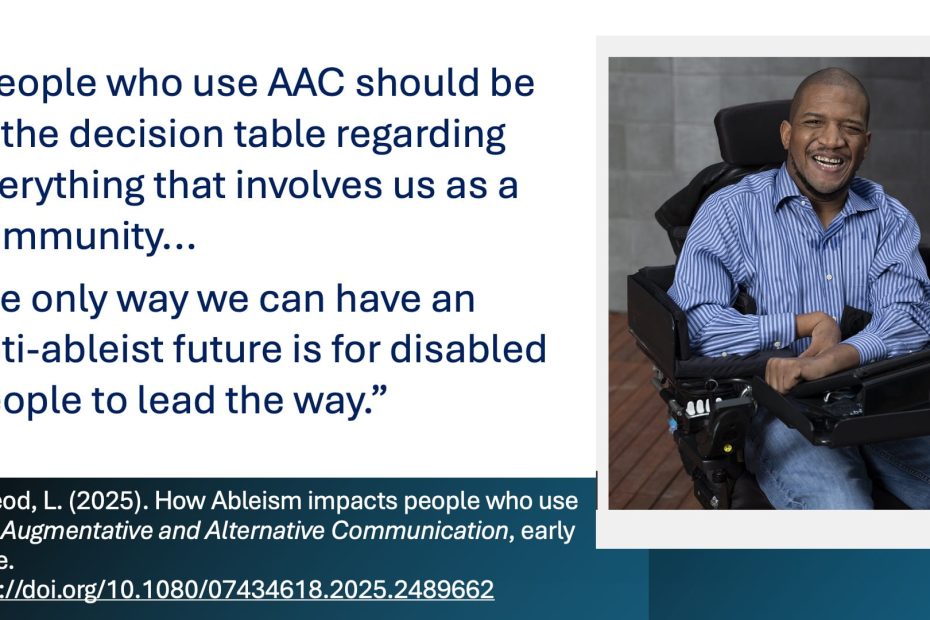
Dr. Lateef McLeod describes the impact of Ableism on people who use AAC.
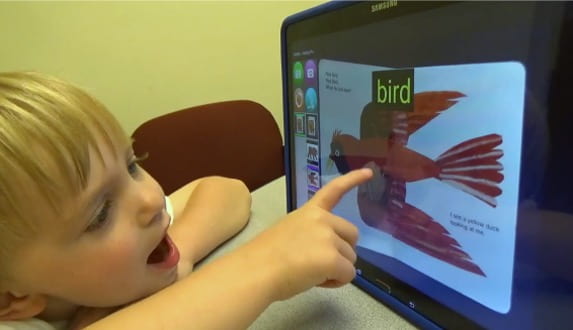
This module provides information on strategies and tools professionals can use while using visual scene displays with young children who use augmentative and alternative communication (AAC). These evidence-based strategies and tools have been shown to… Using Visual Scene Displays While Working with Young Children who use Augmentative and Alternative Communication (AAC)
This module provides information on strategies and tools professionals can use in literacy intervention for sight words with preschoolers who use augmentative and alternative communication (AAC). These evidence-based strategies and tools have been shown to be effective in children and adults and across varying cognition and language levels and diagnoses, but we are focusing specifically on studies conducted with preschoolers in this module. This module consists of readings and interactive material to support translation of research to practice.
AAC Colloquium is a weekly series of informal presentations on AAC by (and for) the Penn State AAC community. Both students and faculty are welcome to organize a session, please contact Beth Frick Semmler (bfs5682@psu.edu)… AAC Colloquium – Autumn 2024
Registration for the AAC Learning Center Moodle is a 3-step process. At the home page for the AAC Learning Center Moodle, select the option to register a new account. 2) On the Registration… Registering for the AAC Learning Center Moodle
Anthony Arnold describes his use of AAC to pursue 4 key goals of adult life
The AAC Learning Center is a free educational resource on augmentative and alternative communication (AAC), and provides presentations by persons who use AAC, short lectures by AAC researchers, and links to information on AAC. Please… Welcome to the AAC Learning Center