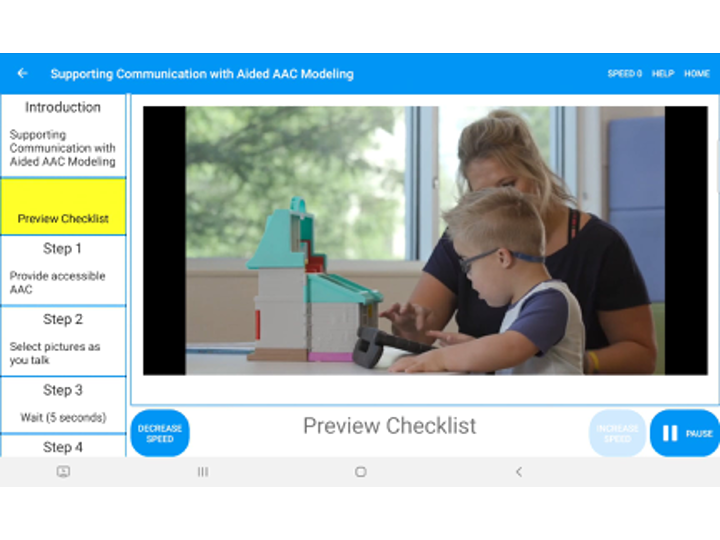
Aided AAC Modeling
– AAC user: child
– Communication partner: parent
– Target skill: aided AAC modeling
People who need or use AAC interact with many different communication partners, including family, friends, members of the community, and professionals. These communication partners may need training to ensure successful interactions.
The INSTRUCT app provides a quick and easy tool to train communication partners. Professionals, people who use AAC, or their families can use INSTRUCT to create short trainings for communication partners or edit existing trainings.Communication partners can use INSTRUCT to view trainings to learn new strategies or skills.
INSTRUCT trainings provide very short, focused instruction to teach communication partners how to implement strategies or procedures. The trainings use evidence-based instructional techniques including checklists and video demonstrations of each step.
This library includes examples of INSTRUCT trainings proven to be effective to teach a range of communication partners of children or adults who need or use AAC.
Click on any training to see more details and view the actual training.
– AAC user: child
– Communication partner: parent
– Target skill: aided AAC modeling
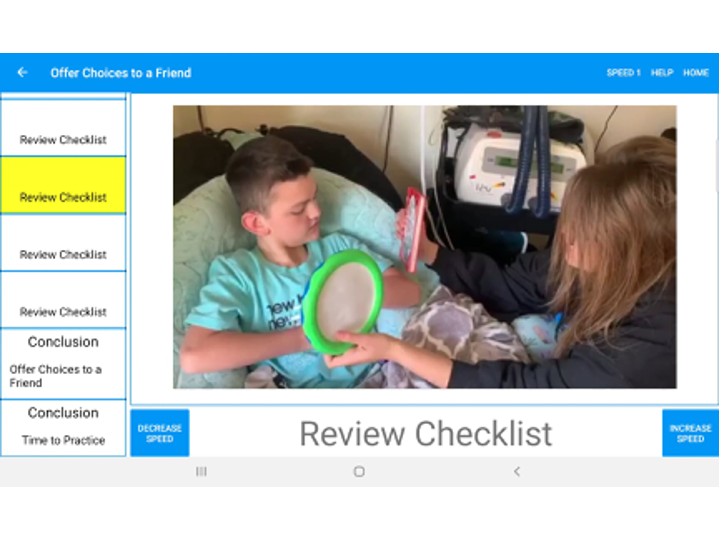
– AAC user: elementary age students with multiple disabilities including emerging symbolic communication and cortical visual impairment
– Communication partner: elementary age students
– Target skill: offering choices
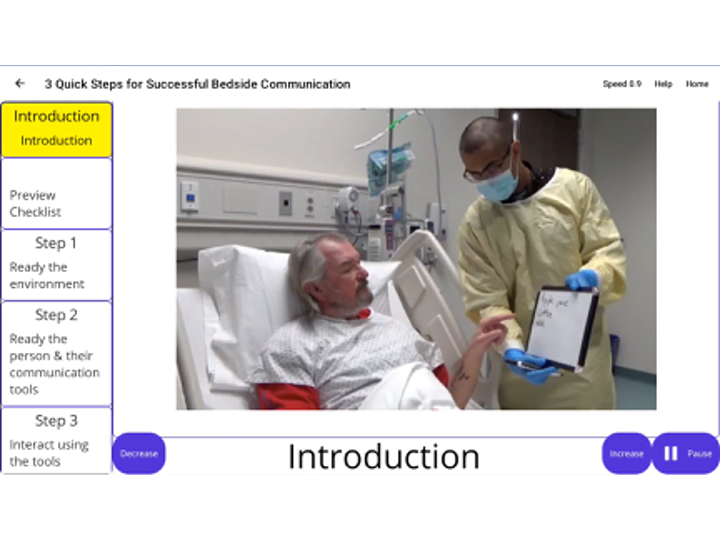
– AAC user: adult patients with communication difficulties
– Communication partner: acute care healthcare providers
– Target skill: improve bedside communication

– AAC user: hospitalized children and adolescents with a wide variety of developmental and/or acquired disabilities
– Communication partner: inpatient health care providers
– Target skill: offering choices

– AAC user: this training shows how INSTRUCT can be used by people with disabilities, including those who benefit from AAC, to develop their own trainings for their communication partners
– Communication partner: this training was created by an autistic college student to teach his peers how to interact with him based on his lived experience
– Target skill: how to interact with someone on the spectrum (based on one autistic college student’s lived experience)
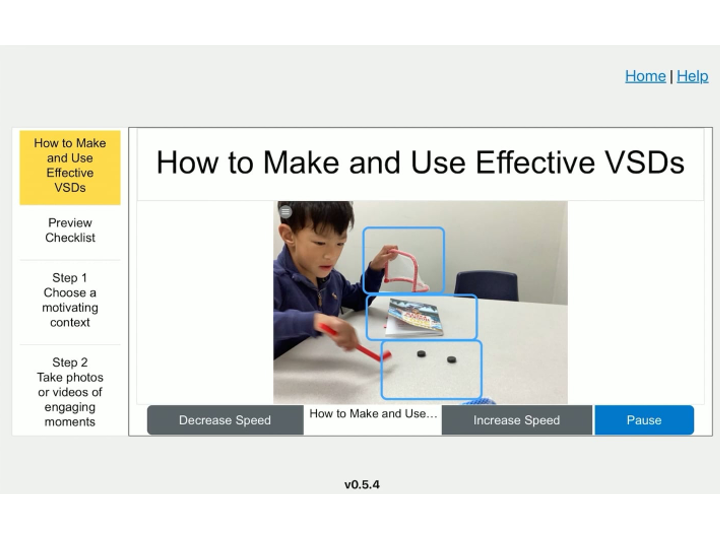
– AAC user: beginning communicators
– Communication partner: preservice speech-language pathologists
– Target skill: implement visual scene displays
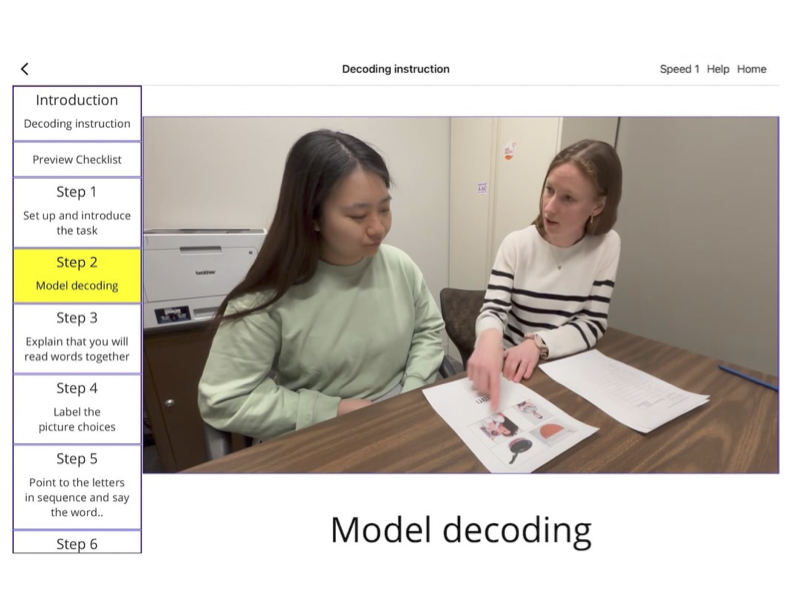
– AAC user: individuals with early literacy skills
– Communication partner: preservice speech-language pathologists
– Target skill: providing decoding instruction to people who use or benefit from AAC

– AAC user: students who use eye gaze systems
– Communication partner: school staff
– Target skill: prompt & encourage communication
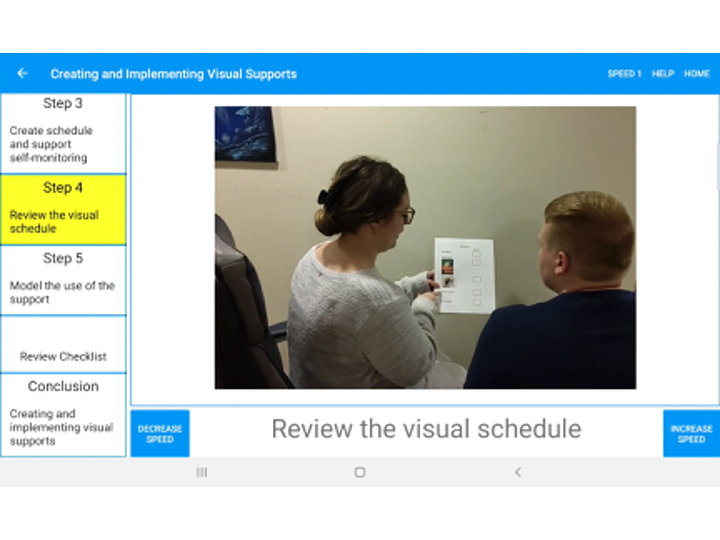
– AAC user: young adults
– Communication partner: educators or support staff
– Target skill: create visual schedule
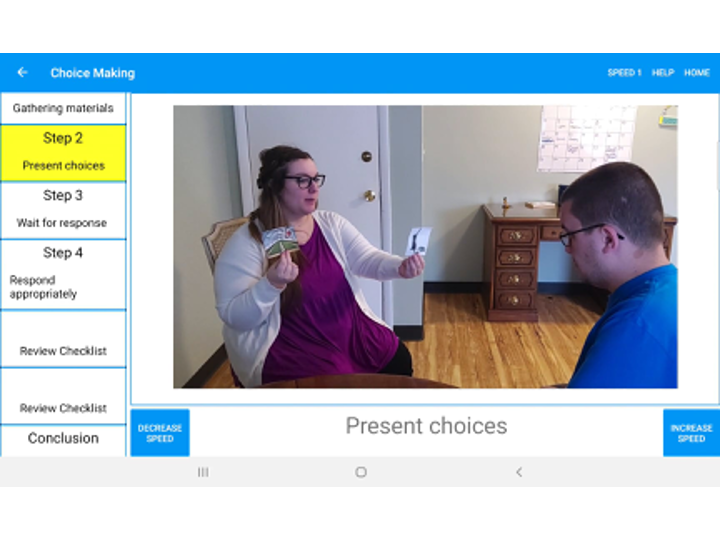
– AAC user: young adult with autism
– Communication partner: support staff
– Target skill: offering choices